The workout you
never skip.

Not before work. Not after work. During work.
Real coaching sessions you do at your standing desk — whether you're vibe coding at 2am, traveling, rehabbing an injury, or just stuck in back-to-back meetings.

Get Free Workouts

You already know the problem

You tell yourself you'll work out before work. Then the morning disappears. You'll go after work. Then you're deep in a coding session and it's 10pm. You'll go to the gym on the weekend. Then you're traveling. Or your back locks up. Or you just... don't.

The traditional model — separate workout time, separate location, separate clothes — fails because your work doesn't respect those boundaries. Especially when you're building with AI and the best ideas hit at midnight.

What if the workout happened inside the work?

How this started

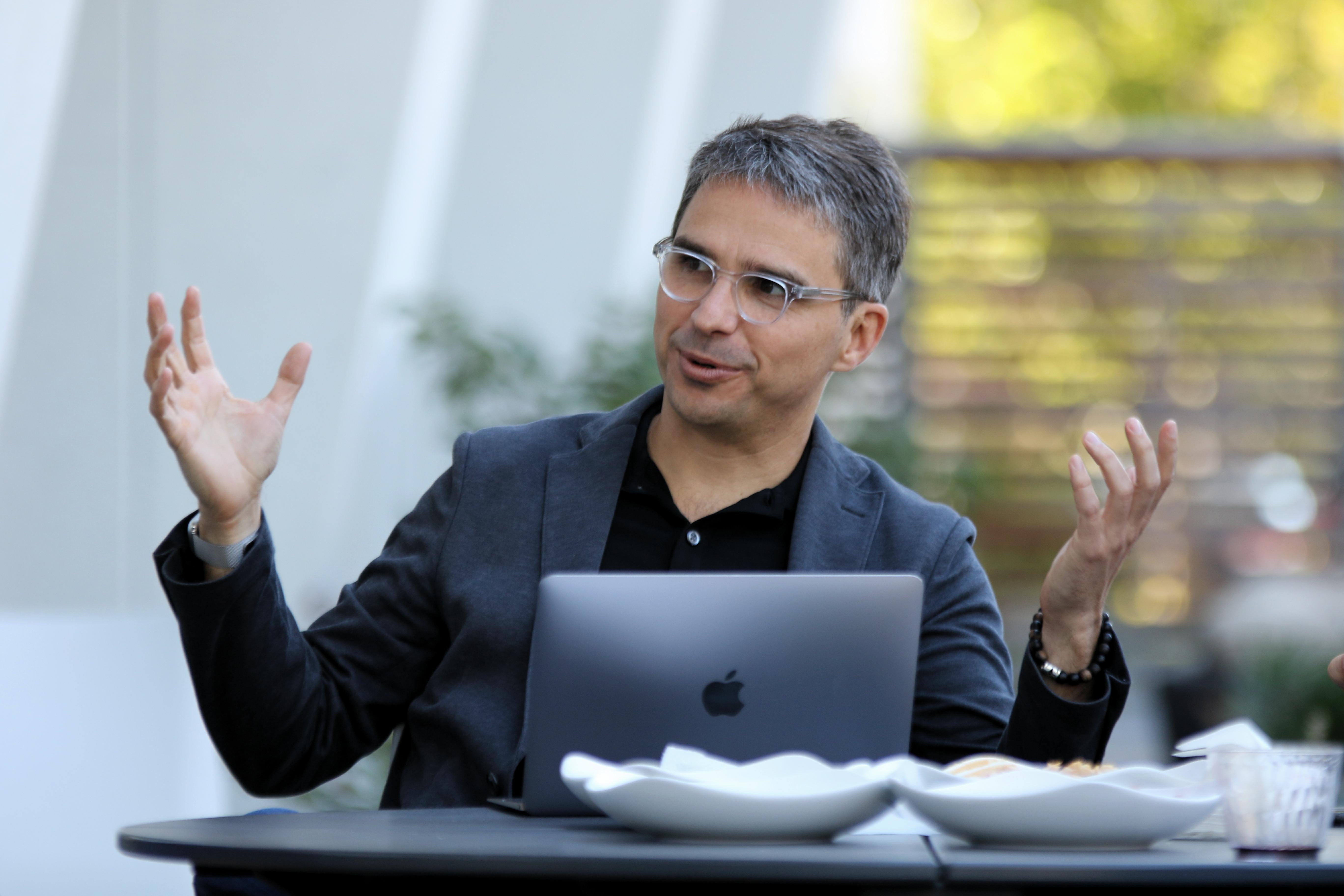
I'm Walter. I build software with AI at a standing desk. I was tired of my body paying the price — tight back, stiff hips, the usual desk-worker damage. I'd go weeks without a real workout, then overdo it, then hurt myself, then skip more weeks.

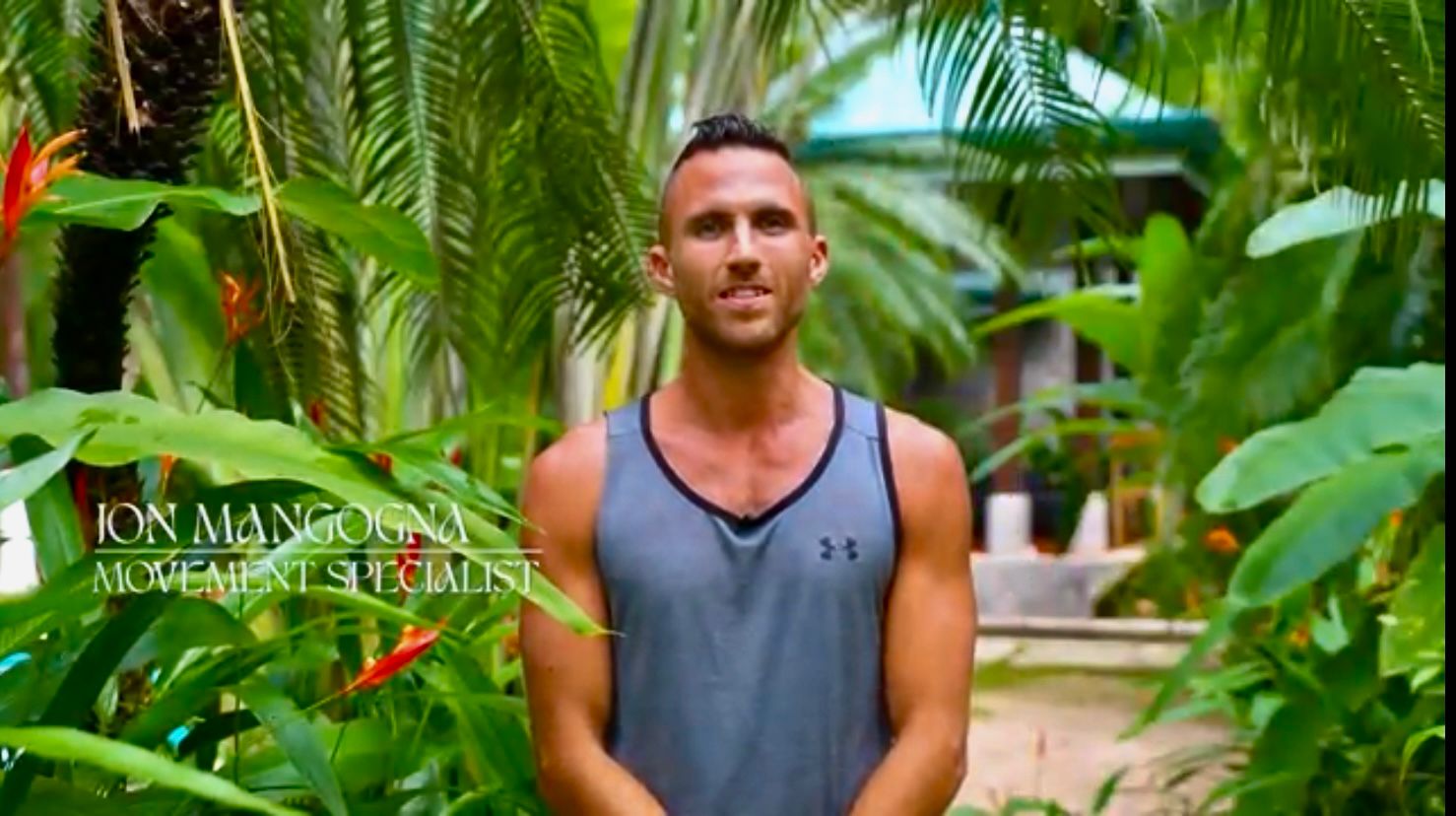
So I hired Jon — a movement coach based in Costa Rica who trains professional surfers and world-class athletes — and told him: I need workouts I can do while I'm working.

We started weekly sessions over Zoom. Jon coaches, I move at my desk. While my AI agents process tasks, I do thoracic rotations. While reviewing a PR, I'm doing ankle rolls. While code compiles, I'm holding a single-leg squat I don't even realize has lasted three minutes — because my mind is on the work.

We've done 13 sessions now. I haven't missed a single one. And the workouts are spreading into my whole day — five-minute blocks between tasks, movement snacks during meetings, spontaneous squats while playing with my dog. My body just knows where to go now.

Two dials. You control both.

Every move has two independent settings. Mix and match for any moment in your workday.

Intention

How much attention goes to the workout vs. your work.

20% Ankle rolls during a video meeting — invisible to everyone
50% Fascial stretch while AI is thinking — set it and breathe
80% Thoracic rotations between tasks — your PT would approve
100% Full BFR protocol — the burn is the point

Effort

How hard you push within each move — independent of intention.

Gentle Movement variability — just break the stillness
Moderate Active mobility with decompression breathing
Strong Overcoming isometrics — real strength, zero equipment
Near-max Blood flow restriction — tricks your biology into 150 reps

These dials are independent. You can do gentle moves with full attention, or hold an intense isometric while debugging code. Jon discovered that when I focus 100% on work while in a hold position, I sustain the isometric far longer than I ever would consciously — the work becomes the workout fuel.

Works when nothing else does

Traveling

Every move works in a hotel room, an airport gate, or a coffee shop. Pelvic marches, standing rotations, foot work — all invisible to everyone around you. Jon designs travel protocols on the spot.

Injured

When my back locked up from stress and skiing, Jon didn't cancel — he reprogrammed the entire session around it. Low-threat movements on the ground, building up to standing. Same tools, different dosage. We didn't start over. We kept building.

2am coding session

No gym is open. No workout "fits." But you're standing at your desk and AI is processing. That's a five-minute lunge decompression. That's ankle motor control. That's a movement snack that makes you sharper when the output arrives.

What a session actually looks like

Warm-up
Ankle Motor Control 20% intention

Roll ankles through full range at your desk. Dorsiflexion rolls, big toe and pinky toe touches. Do it during any conversation — nobody knows.

Mobility
Thoracic Rotation with Dissociation 40-80% intention

Rotate upper back while hips stay locked. Add isometric tension. Layer saccade eye resets for frontal lobe activation. The foundational spine move.

Tensegrity
Lunge Decompression 30-100% intention

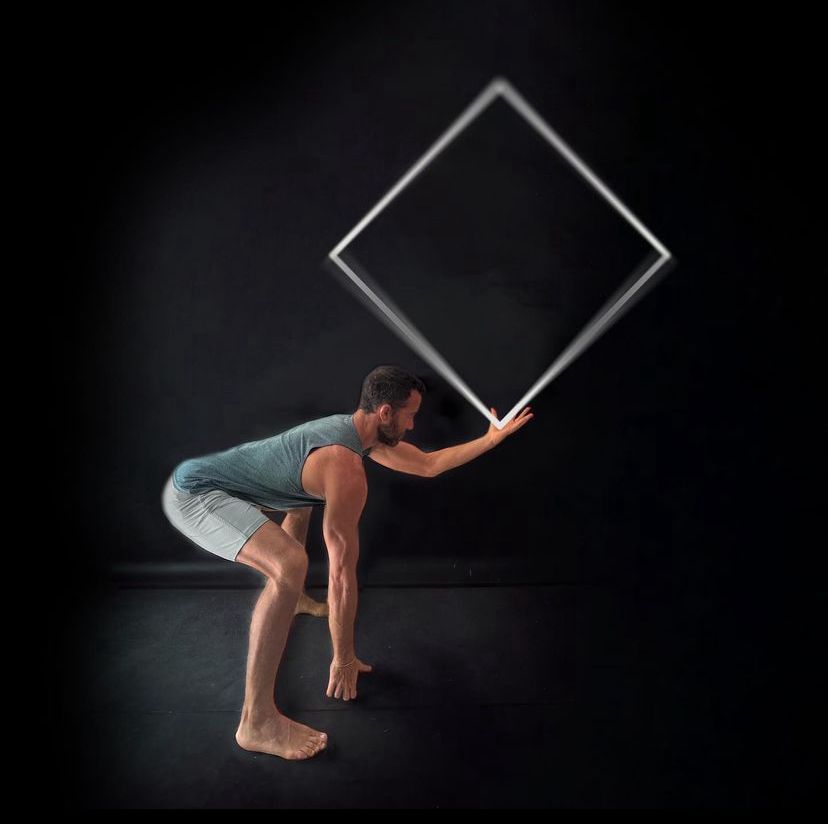
Split stance, full-body tension feet-to-fingertips, hip spiral, decompression breathing. One position, infinite dosage — from gentle reset to near-max effort.

Strength
Single-Leg Squat BFR Protocol 100% intention

30-second hold, reps to near-failure, 30-second hold. Blood flow restriction without bands — just bodyweight and time under tension. Builds tissue your joints will thank you for.

Neuro
Eye Saccades + VOR Stacking 40-60% intention

Rapid eye switches activate your frontal lobe — better decision-making, less emotional reactivity. Stack with head turns for vestibular training. Learn why this matters →

Every session is 5-10 moves. Do the whole thing in 30 minutes, or spread individual moves across your workday as 5-minute blocks.

This isn't a YouTube workout

Real coaching, real science

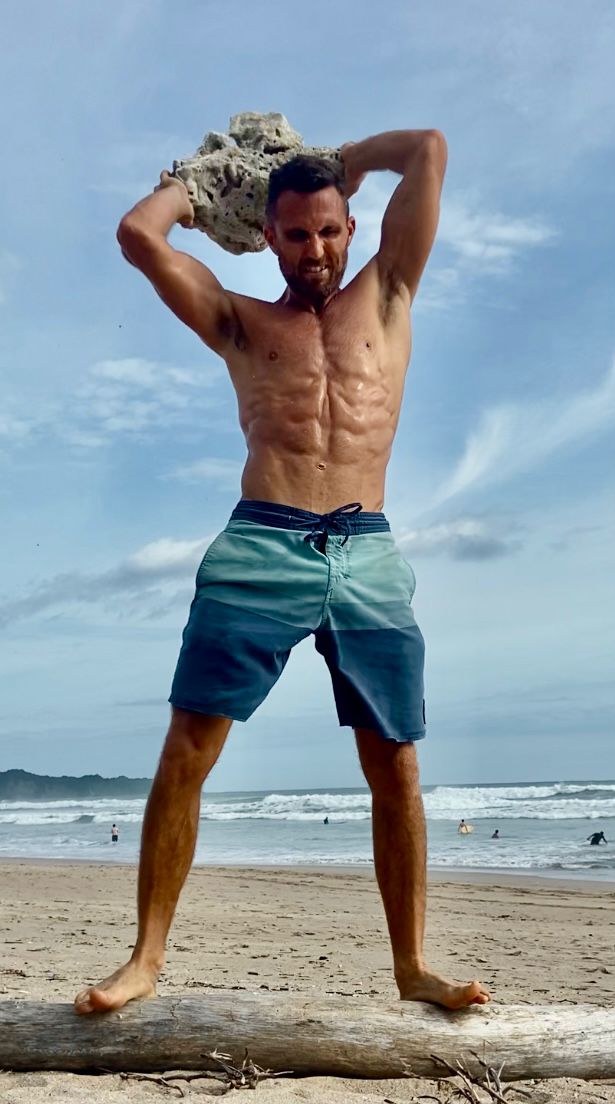
Jon trains world-class surfers with the same methods. His pro surfer client Nadav did Sufi breathing and foundation training for 15 minutes before every heat — wearing a dark mask on the beach — and won a world championship event. These aren't generic routines.

Your brain gets trained too

Saccade exercises activate your frontal lobe — improving executive function, long-term planning, and inhibiting emotional decision-making. Vestibular work increases BDNF, the protein that grows new neural connections. Read the science →

Moves, not time blocks

No "30-minute workout" pressure. Each move is independent and modular. Do one while your code compiles. Do three while AI is thinking. Do all seven when you have focus time. Stack them into your day like movement snacks.

The coach

Jon is a movement coach based in Costa Rica who trains professional surfers, athletes, and people recovering from injury. His approach combines motor control, overcoming isometrics, vestibular training, breath-hold protocols, and fascial work — grounded in neuroscience, not fitness trends.

He doesn't do generic programming. When my back locked up from stress about missing a train — yes, stress, not a bad lift — Jon built a threat-level protocol on the spot: lowest-threat movements on the ground first, building up to kneeling, then standing, then strength work. By the end of the session I was doing bench presses.

"Don't think of exercises as the whole world of movement. Now you're building habitual ideas where you didn't have to sit and say, 'what was that thing again?' Now you have a movement snack that's really, really, really powerful."

"The beauty of the isometric is you're in charge. You can shift and tune the tension — if neck feels tense, redirect to obliques, hamstrings, core."

What 13 sessions changed

"I started to just get Jon vibes. I started to squat and play with my dog... and my body just kind of did it. I didn't have to think. That was a good workout and I didn't even plan it."
Session 4 — Spontaneous movement
"My legs are burning. Come on, Claude." I was debugging AI code and didn't realize I'd been holding a wall-sit squat for three minutes. Jon flipped the script — 100% focus on work, but the body was training the whole time.
Session 10 — The vibe workout
"We hit the BDNF stuff and two things: there are so many more 'Jon moments' where something was happening and my body just caught it. It felt like I was a well-tuned machine."
Session 3 — Jon moments
"I was running, and something hit. My body just kinda went like this, and kept going. No strain, no pain, no injury. I could see the movement menu Jon created and my body just did it."
Session 12 — The movement menu

Try a free session

Full workout with structured move cards. No email required.

More sessions available with free email signup below.

Get the full workout library

All workouts — past and future. New sessions drop after each coaching session with Jon. No spam, no payment. Just movement that fits inside your workday.

By subscribing, you agree to receive workout notifications from Intention Workouts. Unsubscribe anytime with one click.